English (UK)English (UK)
  • Español
Calar Alto Astronomical Observatory
  • News
    • Press releases
    • Brief News
    • Public outreach
  • About CAHA
    • Introduction
    • Contact
    • Gallery
    • Staff
      • Staff List
      • Internal
    • CAHA Departments
      • Astronomy
      • Computer
      • Maintenance
      • Electronics
      • Mechanics
      • Project Office
    • CAHA Committees
      • Executive Committee
      • Science Advisory Committee
      • Time Allocation Committee
    • Transparency Portal
    • Job Offers
    • Privacy Policy
      • Privacy Policy
      • Cookies Policy
      • Surveillance Policy
      • Security policy
  • Observing
    • Telescopes & Instruments
    • DDT
    • Data Management Plan
    • Call for proposals
    • Information for Astronomers
    • Utilities & Forms
    • Weather
  • Science
    • Science Advisory Committee
    • Instrumental projects
      • CARMENES+
      • TARSIS
      • MARCOT
    • Legacy programs
      • CARMENES Legacy+
      • CAVITY
      • KOBE
    • Publications
    • Public archives
    • Meteors and Fireballs
    • Reports
  • Services
    • Brief description
    • Access protocols and committees
    • Observing time
    • Data Management Plan
    • Mirror aluminising
    • Public archives
    • Weather station
    • Visit Calar Alto
    • Open tenders / Contracts
    • Outdated tenders / Contracts
    • Tenders status
    • Anti-fraud Measures Plan
CARMENES succeeds in characterizing the atmospheric composition of the exoplanet GJ 436 b with record precision

CARMENES succeeds in characterizing the atmospheric composition of the exoplanet GJ 436 b with record precision

portadaAlmería, 29 January 2026

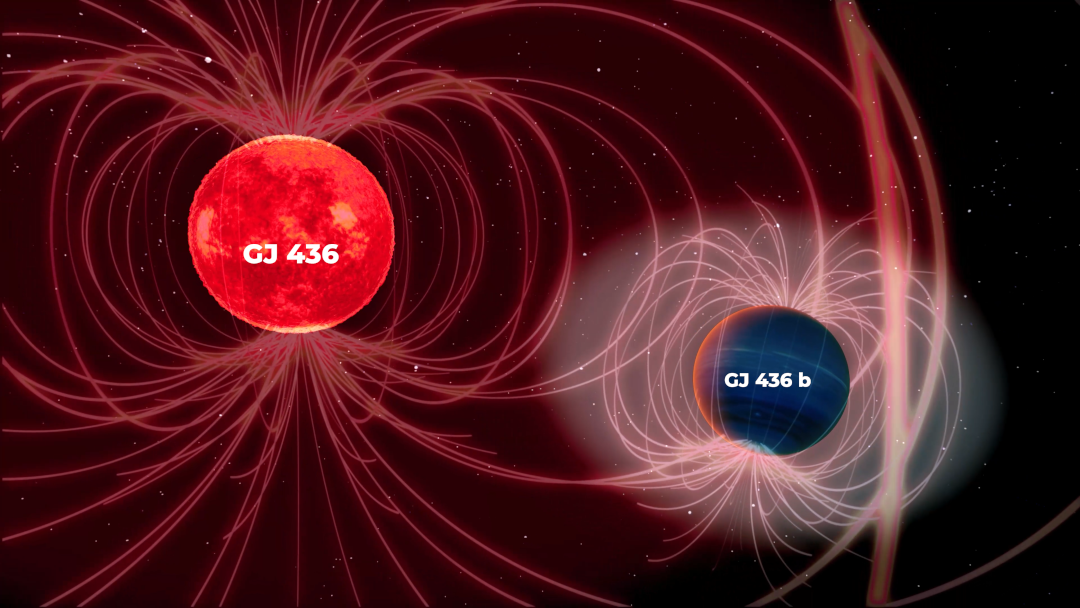
A study based on observations from the CARMENES instrument has made it possible to gain deeper insight into the atmosphere of GJ 436 b, a Neptune-like exoplanet that orbits very close to a red dwarf and undergoes intense atmospheric loss.
The results reveal the presence of clouds in extremely high atmospheric layers and an exceptional metallicity, about 900 times higher than that of the Sun, significantly expanding our understanding of the evolution of this type of exoplanet.


Read More

A new comet discovered with the Schmidt telescope at Calar Alto

A new comet discovered with the Schmidt telescope at Calar Alto

portadaAlmería, 20 January 2026

In the framework of the Space Safety program of the European Space Agency (ESA), Rainer Kresken, an ESA engineer observing remotely with the Calar Alto Schmidt telescope, reported in December 2025 the discovery of a new comet, P/2025 W3 (Kresken). This is the second comet “Made in CAHA”, after comet Thiele (C/1985 T1) discovered forty years ago con el mismo telescopio.

Read More

The President of the CSIC visits Calar Alto

The President of the CSIC visits Calar Alto

portadaAlmería, 24 de octubre de 2025

Eloísa del Pino, presidenta del CSIC, ha visitado el observatorio de Calar Alto antes de celebrar, en Granada, el 50º aniversario del Instituto de Astrofísica de Andalucía (IAA-CSIC). El observatorio tiene al CSIC como cosocio desde 2005, además de la Junta de Andalucía desde 2019. En 2025, celebramos pues tanto los veinte años de la participación oficial del CSIC en Calar Alto como el medio siglo de existencia del instituto granadino.

Los 21 y 22 octubre 2025, una delegación del Consejo Superior de Investigaciones Científicas (CSIC), el mayor organismo público de investigación en España, ha visitado el Centro Astronómico Hispano en Andalucía (CAHA) en Calar Alto.

Read More

¡Esta Navidad, ni una estrella menos!

¡Esta Navidad, ni una estrella menos!

portada1 de octubre de 2025

Empieza la segunda fase de la campaña “No hay Almería sin cielo” para recordar, desde Calar Alto y el IAA-CSIC, la importancia de conservar un cielo oscuro, incluso en navidades. Cuando los pueblos y las ciudades se iluminan con millones de luces decorativas – un número tan excesivo como el consumo en estas fechas –, aumenta la contaminación lumínica. No olvidemos que el cielo estrellado también es parte de la magia navideña: ¡esta Navidad, ni una estrella menos!

Las luces de las ciudades, tanto el alumbrado público como el privado, se esparcen en la atmósfera, generando un halo luminoso que se extiende a kilómetros de distancia, donde se reduce la oscuridad natural de la noche. Este fenómeno de contaminación lumínica afecta a la salud de los habitantes así como a la fauna y la flora (peri)urbanas, ya de por sí mermadas. En los grandes centros urbanos, ahogadas en un día artificial, las estrellas perceptibles a simple vista se reducen de las 3000 visibles en un cielo no contaminado a unas pocas decenas.

Read More

  1. UNIR connects its academic training with Calar Alto
  2. Calar Alto turns stars into climate sensors
  3. Two to tango: rare dwarf-dwarf merger observed in a cosmic void environment

Page 1 of 50

  • 1
  • 2
  • 3
  • 4
  • 5
  • 6
  • 7
  • 8
  • 9
  • 10
  • End

Pie de página

Centro Astronómico Hispano en Andalucía
Observatorio de Calar Alto
Sierra de los Filabres
04550 Gérgal (Almería, SPAIN)

+34-950-632500

+34-950-632504

info@caha.es

Carl Sagan

Somos polvo de estrellas, buscando en el firmamento las respuestas que el universo tiene guardadas para nosotros. La astronomía es el arte de desvelar los secretos del cosmos, y cada noche, al observar el cielo, nos acercamos un poco más a nuestro lugar en el infinito.

Carl Sagan
  • CAHA Home
  • Trabaja con nosotros
  • Perfil del contratante
  • Política de privacidad
  • Política de Cookies
  • Aviso Legal
© 2026 Centro Astronómico Hispano en Andalucía
  • News
    • Press releases
    • Brief News
    • Public outreach
  • About CAHA
    • Introduction
    • Contact
    • Gallery
    • Staff
      • Staff List
      • Internal
    • CAHA Departments
      • Astronomy
      • Computer
      • Maintenance
      • Electronics
      • Mechanics
      • Project Office
    • CAHA Committees
      • Executive Committee
      • Science Advisory Committee
      • Time Allocation Committee
    • Transparency Portal
    • Job Offers
    • Privacy Policy
      • Privacy Policy
      • Cookies Policy
      • Surveillance Policy
      • Security policy
  • Observing
    • Telescopes & Instruments
    • DDT
    • Data Management Plan
    • Call for proposals
    • Information for Astronomers
    • Utilities & Forms
    • Weather
  • Science
    • Science Advisory Committee
    • Instrumental projects
      • CARMENES+
      • TARSIS
      • MARCOT
    • Legacy programs
      • CARMENES Legacy+
      • CAVITY
      • KOBE
    • Publications
    • Public archives
    • Meteors and Fireballs
    • Reports
  • Services
    • Brief description
    • Access protocols and committees
    • Observing time
    • Data Management Plan
    • Mirror aluminising
    • Public archives
    • Weather station
    • Visit Calar Alto